


Home | Learning | Assessment
Assessment
Home | Learning | Assessment
Assessment
Two
Schools
One
Vision

Assessment, Monitoring and Reporting
The robust approach to assessment, reporting and monitoring is encompassed in Belvedere Infants and Juniors Development Planning Cycle. The Assessment Policy provides the rationale and brings clarity to the purpose and importance of assessment as the driver of pupil progress and the measure of effective teaching and learning;
‘Assessment is the means by which the progress, skills and knowledge of pupils is monitored and tracked.’
The policy further defines the importance of assessment:
- To define each learner’s ability: what the child knows understands and can apply
- To gain as full an understanding as possible of each learner’s skills level
- To gain a full understanding of the progress made by each learner
- To gain an awareness of the steps needed to continue progress of both skills and knowledge and to help these steps occur
- To enable teaching staff to plan and deliver learning opportunities which will ensure progression for learners
- To gain an understanding of the efficacy of teaching strategies
- To ensure continuity and progression throughout the school
- To reveal children’s strengths and weaknesses
- To enable teachers to plan and deliver learning that is appropriately challenging to pupil’s attainment
- To communicate accurate information about the learner that is useful to teachers, pupils, parents, and other educational agencies
- To ensure early identification of children with SEN and those who are more able
The staff at Belvedere schools are developing a wider range of strategies for assessing children’s work, through; continued professional development, peer support and observations, coaching, constructive feedback from lesson observations and work scrutiny to transform the policy into practice.
These strategies include:
- Observation – watching the children on task
- Working with guided groups
- Listening to, questioning/discussions with the children
- Photographing
- Examining children’s written/recorded learning
- Marking children’s learning
- Target setting and attainment
- Assessment notes for future planning
- Assessment for learning marking – next steps
- Formal testing to assess children’s skills and knowledge against standardised levels
- Work scrutiny
Summative assessment data is systematically recorded and tracked electronically each term through the use of Insight, quality assured through the systems described above, with: half termly tests in the core subjects, mock SATs, AI testing through Renaissance in reading and maths as well as Pupil Progress meetings and moderation meetings.
The data from the termly tests and ongoing teacher assessment is inputted on Insight. The assessment leader and the core subject leaders analyse the data, focusing on gender, ethnicity and individual levels. This helps to inform the school leaders of areas for future development and increased challenge. It also informs the school’s intervention strategy, which is responsive to the assessment tracking system.
Foundation subjects are assessed termly recording levels at, above or below the national expectations for all pupils. This level is judged through teacher assessment of the pupil’s knowledge and skills. Each child has an art sketchbook that moves with them through the school and can be very useful for transition to secondary school.
Intervention Programmes
Intervention programmes are frequently put in place to support or extend learning for children with particular aptitude or experiencing difficulty in making progress towards their targets. The assessment data for children attending these groups is recorded and entered onto Insight to track progress. This will include Booster Classes and setting arrangements.
Statutory Assessment Tests (SATs) for Year 6
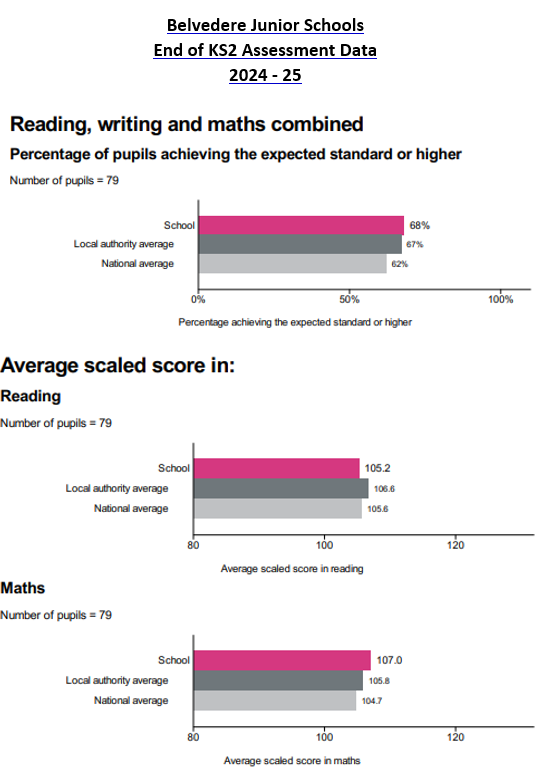
Children in Year 6 take part in the KS2 SATs for reading, writing, spelling, grammar and punctuation and maths during a specific week in May. These tests are marked externally and the results reported to the school and LA.
Reporting and Communication with parents/carers
Reporting and partnership with parents is crucial to success for the child. Each parent/carer will have three formal opportunities each year to meet their child’s teacher to discuss their progress and attainment.
Autumn
This will be an 8 minute evening meeting in the first half of the Autumn Term, designed to allow the teacher and parent/carer to share any concerns or anxieties they may have regarding their child’s new class. Initial impressions will be shared and points to help the development of the child discussed.
Spring
This meeting will be conducted as an open, informal meeting where parents are able to meet the teacher and look through their child’s books and work samples.
Summer
This meeting will be a review of the year and follows on from the publication of the child’s report. This meeting will be used specifically for parents of children who have a specific concern or those that the teacher wants to see for a particular reason.
Reports
At the end of the summer term each teacher for each pupil will publish a formal report. This report will have full written sections on general attributes and successes, English and Maths. Attendance data and the other National Curriculum subjects will also be reported. Statutory assessment data for Phonics in Year 1 and 2 and Year 6 SATS results will be recorded. Parents will be clear on the progress made through the termly meetings and tracking the individual targets and any intervention programmes for their child.